
You’re standing on a roof in Arlington or knee-deep in a crawl space in Bethesda, finishing another long day of hard work. You check your phone, expecting to see a list of new inquiries from your website. Instead? Crickets. You know you’re getting clicks: you might even be paying for them: but the phone isn't ringing. It’s frustrating, it’s expensive, and it’s a waste of your hard-earned marketing budget.
The hard truth? Your website might look "fine" to you, but if it’s not booking jobs, it’s failing its only mission. In the home services world, your website is your digital storefront, your 24/7 salesperson, and your primary closer. If it’s messy, slow, or confusing, potential customers in the DMV area will click away faster than a Silver Spring thunderstorm. Speed matters. Clarity matters. Results matter.
The good news? Most booking killers are easy to fix once you know where to look. We’ve analyzed hundreds of home service sites: from roofers to plumbers: and identified the top ten reasons websites fail to convert. Let’s get your digital house in order.
1. Your Load Speed is Slower Than I-495 Traffic
If your website takes more than three seconds to load, you’ve already lost half your audience. Homeowners in Alexandria or Fairfax don’t have time to wait for high-resolution photos of your trucks to buffer. They have a leaking pipe or a broken AC unit, and they need a pro: now.
Google hates slow sites, and your customers hate them even more. When a page lags, users assume your service will be just as sluggish. You need to optimize your images, clean up your code, and ensure your hosting is up to the task. Every millisecond you shave off your load time is a potential dollar back in your pocket.
Pro Tip: Use tools like Google PageSpeed Insights to see exactly what’s dragging you down. Often, it’s just a few oversized images that need to be compressed.
2. The "What, Where, and How" are Hidden
You have about five seconds to tell a visitor exactly what you do, where you do it, and how they can hire you. If they have to scroll to find out if you serve Silver Spring or if you handle commercial electrical work, they’re gone. This information belongs "above the fold": the part of the site visible without scrolling.
Your headline should be punchy and direct. Instead of "Quality You Can Trust," try "Expert Roofing Services in Arlington & Alexandria." Tell them exactly what the mission is. Don't make them hunt for the "Contact Us" button; make it the most obvious thing on the page.
3. Your Call to Action (CTA) is Weak or Invisible
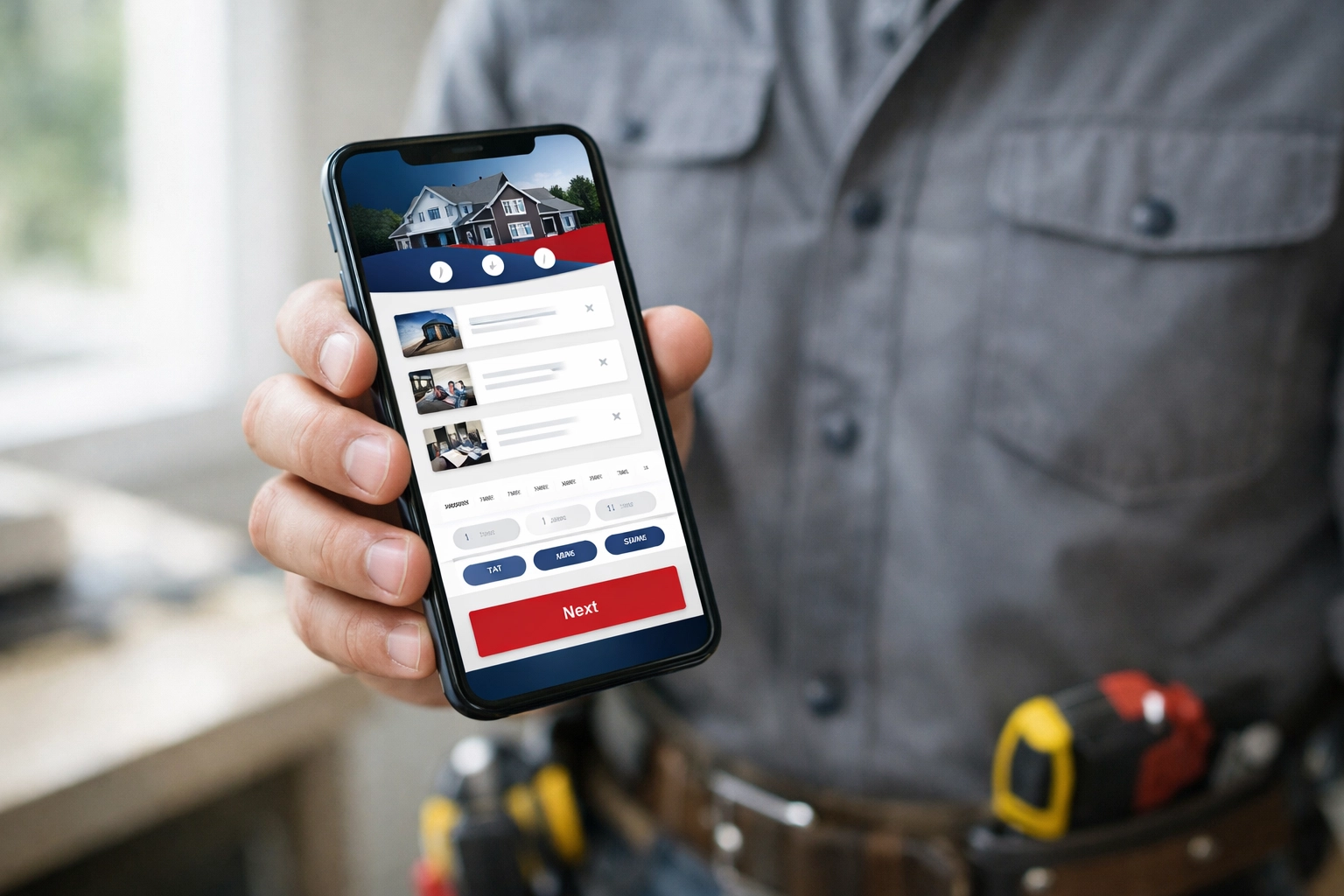
What do you want people to do? Call you? Fill out a form? Book a demo? If your CTA button is small, grey, or buried at the bottom of the page, nobody is going to click it. Your "Book Now" or "Get a Free Quote" button should jump off the screen. Think contrasting colors: orange, yellow, or bright blue: that stand out against your brand palette.
Repeat your CTA frequently. One at the top right, one in the hero section, and one after every major service description. You aren't being pushy; you're being helpful by making the next step clear. If you’re curious about how to better guide your users, check out our contact page to see how we handle lead capture.
4. Mobile Users are Being Left in the Cold
Most of your leads are looking for you on their phones while they're standing in their kitchen or sitting in their driveway. If your website isn't "responsive": meaning it doesn't automatically adjust to fit a phone screen: you’re essentially closing your doors to 70% of your market. Small text, buttons that are too close together, and forms that are impossible to fill out on a mobile device are absolute booking killers.
Mobile optimization isn't a luxury anymore; it's a requirement for survival. Your site needs to be "thumb-friendly." This means large buttons and a click-to-call phone number right at the top. If a customer can’t call you with one tap of their thumb, they’ll call the guy who makes it easy.
5. You’re Using Too Much Stock Photography
People in the DMV want to hire *you*, not a group of generic models in pristine hardhats from a studio in California. When customers see stock photos, their "sales alarm" goes off. It feels impersonal and, frankly, a bit lazy. Trust is the currency of the home services industry.
Replace those stock images with real photos of your team, your branded trucks, and your actual work in local neighborhoods like Chevy Chase or Reston. A slightly imperfect photo of your crew finishing a job is worth ten polished stock photos. It proves you’re a real local business that actually does the work.
Pro Tip: Take a "before and after" photo of every single job. This creates a library of authentic content that proves your expertise better than any sales copy ever could.
6. Your Booking Form has "Interrogation" Vibes
Do you really need their home's square footage, the year it was built, and their middle name just to give a rough estimate? Every extra field you add to your contact form reduces your conversion rate. People are busy and inherently a bit lazy when it comes to typing on phones.
Keep it simple: Name, Phone, Email, and a brief description of the problem. That’s it. You can get the rest of the details during the follow-up call. The goal of the website is to start the conversation, not to complete the entire intake process. Remember, 74% of plumbing contractors' calls go unanswered: don't let your forms be the reason you lose a lead before they even pick up the phone.
7. You Lack Visible "Social Proof"
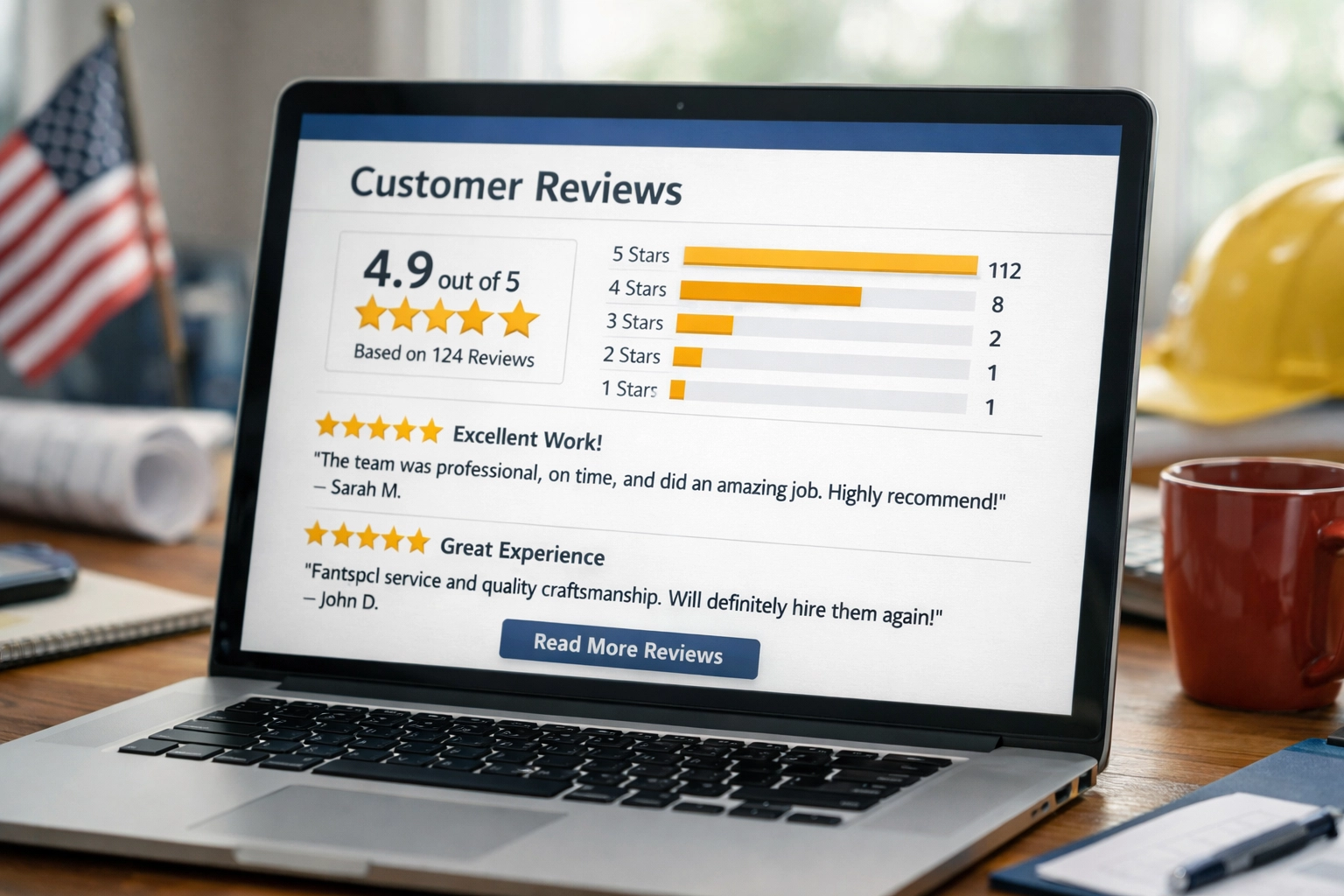
Before a homeowner in Arlington lets you into their house, they want to know you won't mess it up. If your website doesn't feature reviews, testimonials, or industry badges (like NATE, GAF, or the BBB), you’re asking them to take a huge leap of faith. Most won't take it.
Embed your Google Reviews directly on your site. Highlight a "Review of the Month." Show off your local awards. If you’ve served 5,000 customers in the DMV, say so. Numbers and testimonials build a wall of credibility that competitors can’t easily climb. If you're wondering if your site measures up, take our AI readiness survey to see where you stand.

8. You Aren’t Handling Leads After-Hours
The "10 PM Saturday" problem is real. A homeowner discovers a leak, finds your site, but there’s no one to take the call. If they just leave a message in a generic inbox, they’ll keep looking until they find someone who responds. This is where many DMV businesses bleed money.
The solution? AI and automation. Implementing a simple chatbot or an automated booking system ensures that even if you’re asleep, your business is "open." You can capture the lead, qualify the urgency, and even schedule the appointment without lifting a finger. It’s about being available when your customers need you most. Check out our AI services to see how we automate the heavy lifting.

9. Your Content is About You, Not Them
Most home service sites spend way too much time talking about "Our History" and "Our Mission Statement." Truth bomb: Your customer doesn't care. They care about their broken furnace or their leaking roof. They are the hero of the story; you are the guide with the solution.
Shift your language from "We do this" to "You get this." Instead of "We have 20 years of experience in HVAC," try "Get your AC fixed today by technicians who have seen it all." Focus on the benefits: peace of mind, saved money, a comfortable home: rather than just the features of your business. If you're struggling with how to frame this, our about us page shows how we center the client’s success.
10. You Aren’t Tracking What’s Working
If you don't have tracking set up, you're flying blind. You might think your "Emergency Service" page is great, but if heatmaps show that everyone is clicking away before they even read it, you have a problem. Without data, you’re just guessing.
Use tools like Google Analytics and heatmapping software to see how users interact with your site. Where do they stop scrolling? Which buttons do they actually click? Once you have the data, you can stop guessing and start optimizing. It’s about continuous improvement: making your site 1% better every week adds up to a massive increase in bookings over a year.
Stop Losing Jobs to Bad Design
Your website shouldn't just be an online brochure. It should be a lead-generating machine that works as hard as you do on a job site in Silver Spring. If you've checked off these ten points and your phone still isn't ringing, it might be time for a professional audit. The DMV market is too competitive to settle for "good enough."
You don't need a massive budget to fix these issues. You just need a strategic approach and a focus on the user's experience. Start with the big wins: speed and mobile optimization: and work your way down the list. Your bottom line will thank you.
Ready to turn your website into a booking powerhouse? We'd love to help you audit your current setup and find those hidden leaks in your sales funnel. Give us a call or reach out today, and let’s get those bookings rolling in.